


7 Best Induction Kits for Turbocharged Engines

Last Updated: November 6, 2026
Quick Summary
The best induction kits for turbocharged engines are matched to your engine code, draw cold air through a sealed or well-shielded filter housing, and pair with a remap written around the hardware. Fitment comes first, airflow second and sound last, so check the sensor layout and turbo inlet before ordering.
An enclosed kit shields the filter from engine-bay heat, while an open cone gives more sound but needs a heat shield.
Check the engine code before ordering, as the same model year can carry two different engines.
Fit a heat shield with an air gap, then add a cold-air feed to fight heat soak.
Hardware alone gives little on most turbo cars, so pair the kit with a matching remap.
Silicone intake pipe and filter packages at £105.00 suit cars not listed in the range.
Kit and remap, matched to your engine?
We supply and fit induction kits and write the remap to suit your exact engine code.
Table of Contents
How to Choose the Best Induction Kit for Turbocharged Engines
The best induction kits for turbocharged engines are matched to your engine code, driven mostly on cold air, and built around a sealed or well-shielded filter housing.
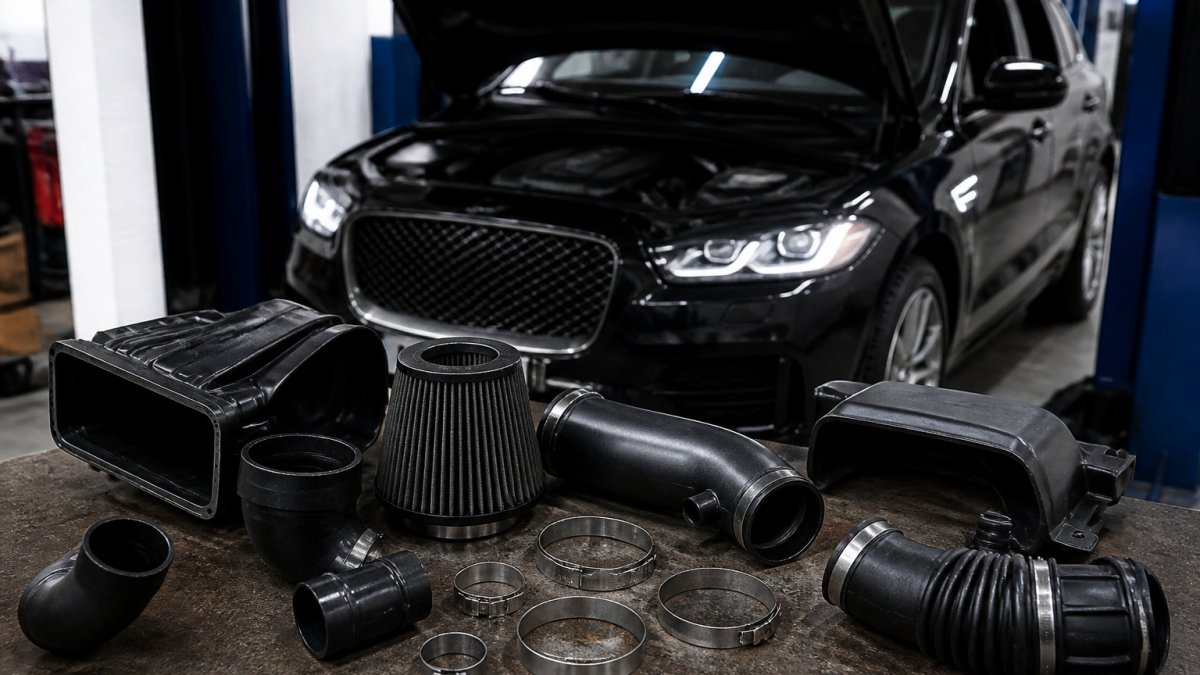
An induction kit replaces the factory airbox with a higher-flow filter and wider pipework. On a turbocharged engine, every bit of air the turbo compresses passes through that intake first, so restricting it caps what the rest of the engine can do.
Below are the seven decisions that separate a kit that works from one that costs you power.
Decision | What to Check | Why It Matters |
Fitment | Engine code, model year, sensor type | Wrong kit will not seal or will trigger a fault |
Design | Open cone vs enclosed | Heat exposure and noise vs protection |
Pipework | Silicone hose and turbo elbow | Removes the biggest airflow restriction |
Heat control | Heat shield and cold-air feed | Fights heat soak in traffic |
Software | Remap to suit the hardware | Hardware alone gives little on most turbo cars |
Budget | Kit price plus fitting plus map | Total cost decides value |
Aftercare | Cleaning and replacement interval | Foam and pleated filters need servicing |
Open Cone vs Enclosed Induction Kit: Which Suits a Turbo?
An enclosed induction kit shields the filter element from engine-bay heat, which is a common reason drivers choose this design. An open cone kit gives more induction sound and a simpler installation, but it sits exposed to hot air unless you add a heat shield.

How turbo size and boost level change the decision
A small turbo running low boost, a 1.0 TSI or 1.5 EcoBoost in daily trim, moves modest air, so an enclosed kit with a panel or cone filter in a sealed housing usually gives the best real-world result: heat protection matters more than maximum flow. A large turbo or high-boost map wants the least restrictive path from filter to compressor inlet, where an open cone with a proper cold-air feed and heat shield earns its place.
The crossover usually sits where the standard intake pipework becomes the restriction rather than the filter itself. If your turbo inlet is already the bottleneck, an open cone alone will not fix it, you need matching pipework and a turbo elbow.
Matching pipe diameter and turbo-inlet design
Induction kits are not interchangeable. The MAF or MAP sensor housing, turbo inlet diameter, and intake pipe route vary by engine code.
Our own range shows how specific this gets:
VAG 1.0 TSI: RAMAIR pleated induction kit at £249.00, or the foam version at £267.44.
VAG 1.9/2.0 TDI PD130-170: RAMAIR air induction kit at £95.00.
Ford Fiesta ST MK8 1.5 EcoBoost: RAMAIR kit with blue hose at £229.00, or red hose at the same price.
Ford Fiesta ST180 MK7 1.6T: RAMAIR with black intake hose at £220.00.
BMW B58 3.0T: RAMAIR foam kit with carbon lid at £335.00, or MST induction at £470.00.
Mini F56 Cooper 1.5T and Cooper S 2.0T: PRORAM induction kit at £210.00.
Fiat Abarth 595/695 1.4T: RAMAIR induction kit at £272.00.
UK ownership: insurance, warranty, and emissions
Check insurance first: insurers commonly treat an induction kit as a modification, so it is worth declaring it to your provider. On warranty, a dealer may argue an aftermarket intake affects a related engine component, so keep the original airbox and be ready to refit it for dealer visits.
The practical split
Enclosed intake: suited to daily drivers and cars that sit in traffic, as the housing shields the filter from engine-bay heat.
Open cone: best for weekend and track cars where you want turbo noise and maximum airflow with a cold-air feed and shield in place; check the shield and feed routing carefully.
Direct replacement panel filter: the cheapest step, keeps the OEM housing, adds a little flow and filtration without the noise or the insurance conversation.
The trade-off is real: open kits give more induction sound, but enclosed kits protect the filter from engine-bay heat. For the deeper version, see our guide on the induction kit mistakes that cost power.
Turbo Induction Kit Heat Soak: Causes and Fixes
Heat soak is when the intake and intercooler pipework absorb engine-bay heat, so the air entering the engine is hotter and less dense.
What actually causes heat soak
Radiant heat from the turbo and manifold: a filter sitting directly above or beside the hot side is the classic mistake. A metal heat shield with a reflective face and an air gap beats a solid plate that conducts heat.
No cold-air feed: route a feed from the front of the car, behind the bumper or from the grille, to bring ambient air to the filter.
Sealed bonnet and stop-start traffic: expect some heat soak on any kit; it clears once airflow returns. Enclosed housings slow the rate of heat gain, which is why they feel more consistent in town.
How to measure whether your kit is heat-soaking
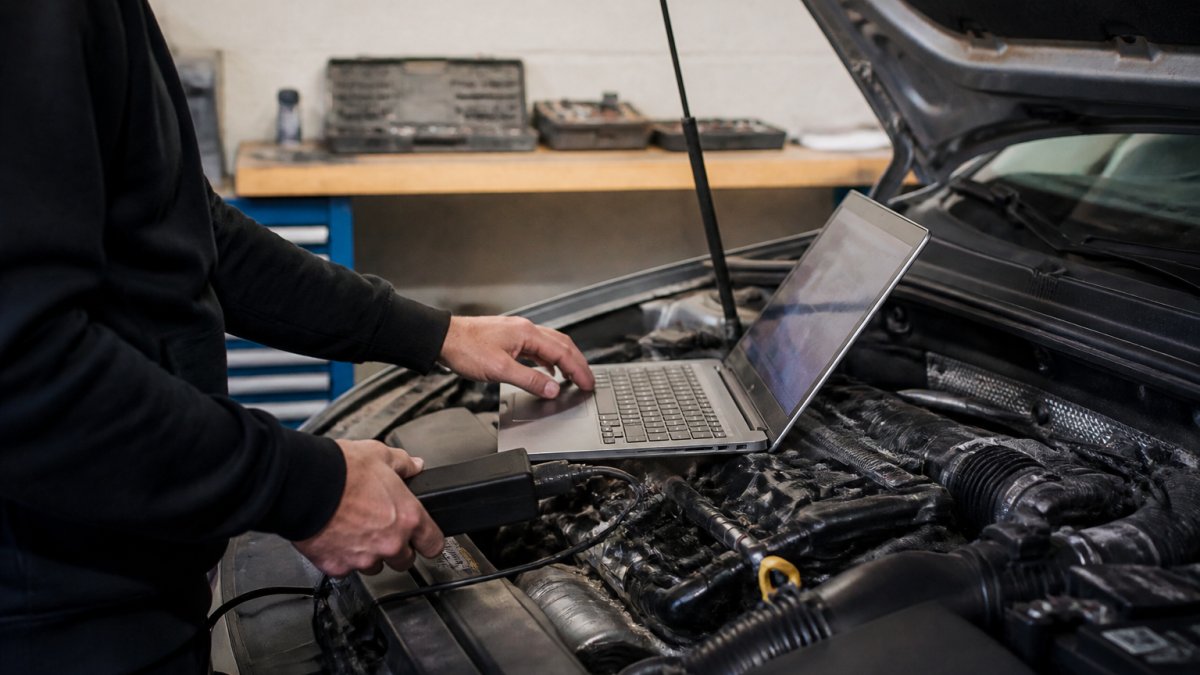
You do not need a dyno to see the pattern. An OBD-II reader displaying intake-air temperature (IAT) shows the recovery curve: note the IAT at idle after a hot stop, then watch how quickly it drops at a steady speed.
Fixes that work, in order of effort
Fit a heat shield around the filter, leaving an air gap between the shield and the hot components.
Add or improve the cold-air feed so the filter sees ambient air rather than bay air.
Move to an enclosed housing if you regularly sit in traffic and want consistency.
Check the pipework seals and replace worn clamps or silicone hoses.
Consider the intercooler if you are running higher boost and seeing repeated heat soak.
Our guide on the induction kit mistakes that cost power covers the fitment and heat traps in detail.
Induction Kit Fitment by Vehicle: Match the Kit to Your Engine
Fitment is where most returns start. The same model year can carry two different engines, and the intake sensor layout often changes between them. Check the engine code before you order anything.
Our own range shows how specific this gets:
VAG 1.0 TSI: RAMAIR pleated induction kit at £249.00, or the foam version at £267.44.
VAG 1.9/2.0 TDI PD130-170: RAMAIR air induction kit at £95.00.
Ford Fiesta ST MK8 1.5 EcoBoost: RAMAIR kit with blue hose at £229.00, or red hose at the same price.
Ford Fiesta ST180 MK7 1.6T: RAMAIR with black intake hose at £220.00.
BMW B58 3.0T: RAMAIR foam kit with carbon lid at £335.00, or MST induction at £470.00.
Mini F56 Cooper 1.5T and Cooper S 2.0T: PRORAM induction kit at £210.00.
Fiat Abarth 595/695 1.4T: RAMAIR induction kit at £272.00.
For B48 turbo petrol BMWs, the Ramair Proram kit for the 1, 2, 3 and 4 Series is the direct match. If your car is not listed, the silicone intake pipe and filter packages at £105.00 are a sensible halfway house: they keep the OEM housing but free up the pipework.
Induction Kit and ECU Remap: Pairing Hardware with Software
Hardware without software leaves most of the gain on the table.
Pair the two and the map can be written around the extra air.
Our explainer on ECU tuning hardware versus software sets out which parts of the calibration move and which do not.
Watch out: a generic file loaded onto a car with an unmatched intake can run lean or trigger a fault code.
Book Your Induction Kit and Remap Package
The last decision is the practical one: who fits it, and does the map match the kit?
Our induction kit and remap package is the usual route for anyone wanting the hardware and software sorted together. You can book online and we will fit at our premises, or come to your home or workplace if getting to us is awkward.
What you get from us:
Over 20 years of experience in innovation and creation
Trade and public discounts, plus member-only offers
Free gifts on all remaps
Most turbo cars are held back by an intake and a map that were never designed to work together. Get both right and the car feels like it should have from the factory.
Get started with Kestrel Prestige and book your induction kit and remap as one job, matched to your engine.
Frequently Asked Questions
Do induction kits increase power on turbocharged cars?
They can help, but the gain is usually modest on their own. A turbocharged engine already forces air in, so the biggest restriction is often the map and the intercooler rather than the airbox. Most drivers notice sharper throttle response and more induction sound before they notice a big BHP jump. Pairing induction kits with a remap is where the real difference shows, because the software can take advantage of the extra airflow.
Are open or enclosed induction kits better for turbo engines?
Enclosed kits generally suit turbo cars better for daily driving because the housing shields the filter from engine-bay heat, which reduces heat soak and keeps intake-air temperature steadier. Open cone kits give a louder induction sound and can flow well with a proper heat shield, but they are more exposed in traffic. If you want consistent performance on a remapped turbo, start with an enclosed design and add a cold-air feed.
How do I choose an induction kit that fits my car?
Check the kit listing against your exact engine code, model year and trim before ordering. Fitment by vehicle matters more than brand, because a kit listed for a 1.5 EcoBoost Fiesta ST will not fit a 1.0 TSI Golf. Look for the hose colour, sensor provision and whether the kit is a direct replacement for the OEM intake. If you are unsure, ask the supplier to confirm compatibility with your registration.
Does an induction kit need an ECU remap?
No, an induction kit runs safely on the standard map because the ECU adjusts fuelling using the mass airflow sensor. A remap is what turns the extra airflow into a measurable gain, and it also lets a tuner account for the kit when calibrating boost and timing. If you plan to remap later, tell the tuner which induction kit you have fitted so the file is tailored to your hardware rather than a generic map.
Comments